Stargosy
In the making for the ZX Spectrum Next: an early test build below

One small ship, a galaxy of 256 stars, and a living to make.

Buy cheap where it's made, sell dear where it's needed, and keep the pirates off your cargo on the way. Take the jobs on the station's bulletin board, save for a better laser, and make your name.

Our own space-trading game in the spirit of the 80s classics, in solid, shaded 3D: the one game made to push the Next as far as it will go. (An argosy is an old word for a great fleet of merchant ships.)

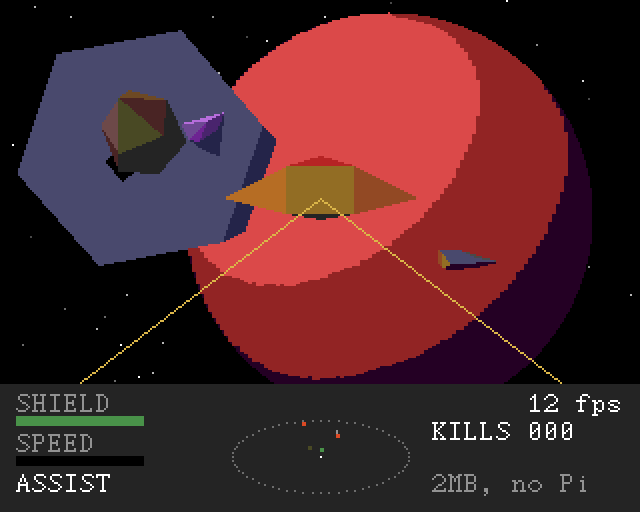
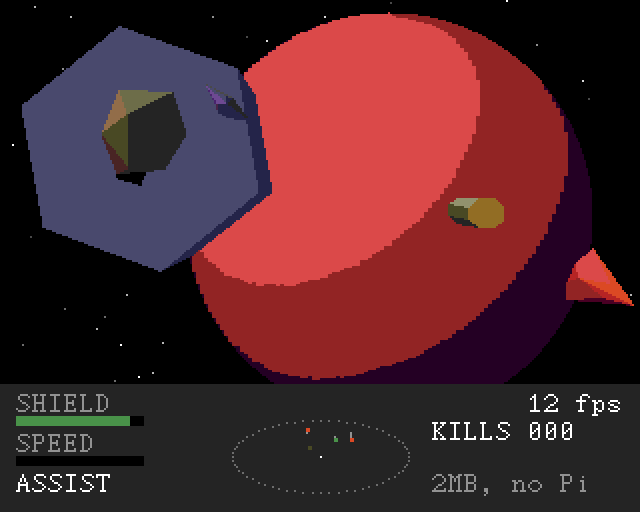
Two yellow laser beams meeting on an orange ship, in front of a six-sided space station and a big red planet, with the ship's console below
Work in progress: lasers on a ship, as a Next draws it

How it plays

Fly, fight, dock, trade

What's in the test build already, and what's on the way. Our own ships, stars and rules, not a remake.

Solid 3D, on a Next

Ships, rocks and stations drawn as solid shapes, shaded by the light of the system's sun, with planets that have a day side and a night side. All in Z80 assembly, at 320 by 256.

Flight that feels right

Pitch, roll and throttle, with flight assist to fly like an arcade game. Switch it off and you drift, turning freely, the way things move in space.

Pirates

They come round, line up and open fire. Shoot back, watch the scanner, and keep an eye on your shield. Two more turn up when you've seen off the last.

Docking is a skill

The station turns slowly. Come in slow, nose straight at its slot, and turn with it. Miss, and you'll know about it.

A market that moves

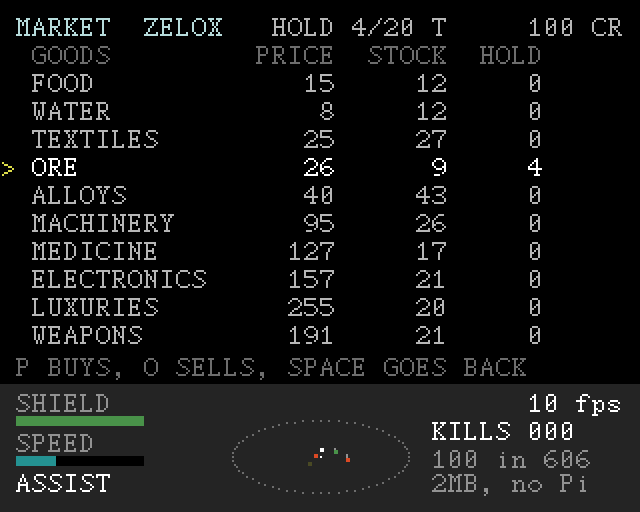
Ten kinds of cargo, from water to weapons. Each world's prices come from what it makes and what it needs, and your own buying and selling pushes them.

256 stars

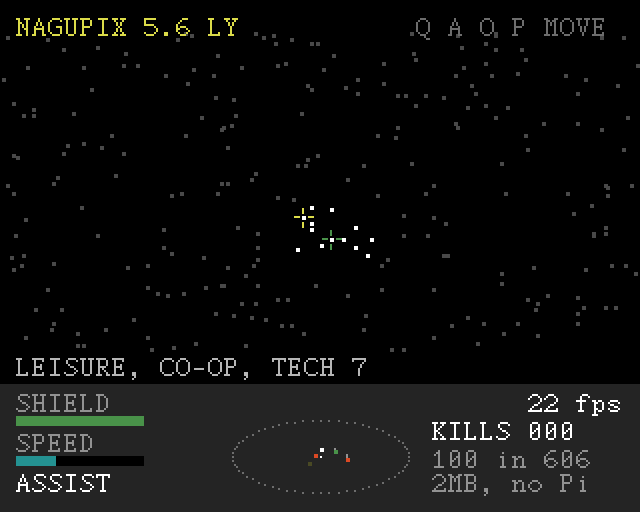
Every system has its own name, economy, government and tech level, all worked out from one number. Pick a star on the chart, launch, and jump, if your fuel will reach.

Jobs and bounties

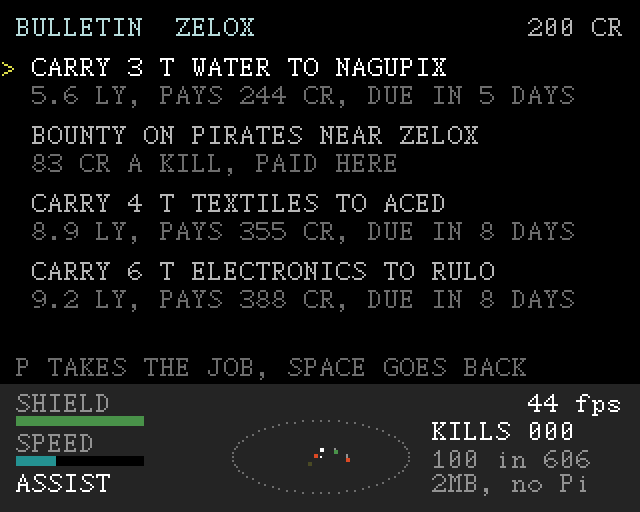
The bulletin board offers deliveries, passengers and bounties on the local pirates. Each job has a deadline in days, and a jump takes time.

The shipyard

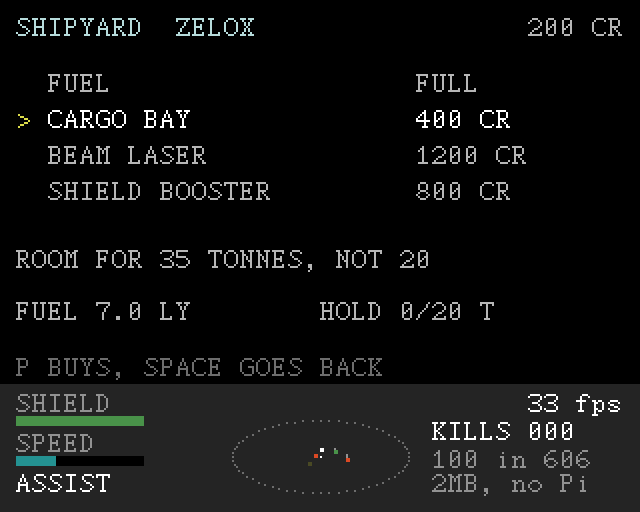
Fuel, a bigger cargo bay, a beam laser and a shield booster. And if the worst happens, the insurance wakes you at the station, poorer.

Coming next

Laser heat and power to share between shields, engines and lasers; the law and its police; missions and a story; mining; and huge star systems crossed by a fast drive.

Music on the Pi

Made for a 2MB Next with the Raspberry Pi accelerator, which will play an orchestral score: our own piece for docking, and music that turns when a fight starts.

Screens

Work in progress

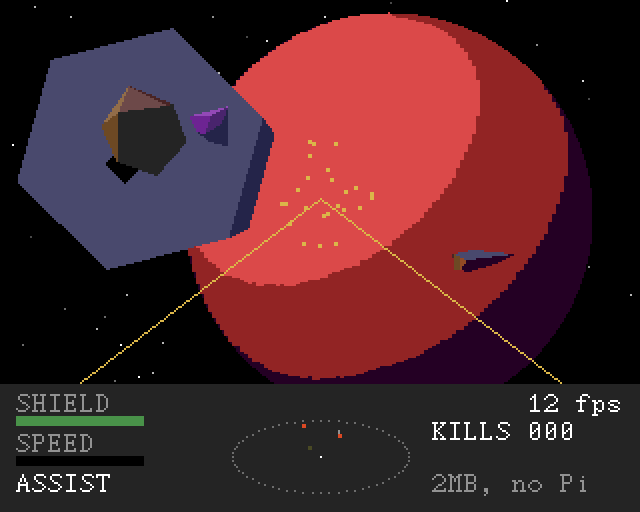
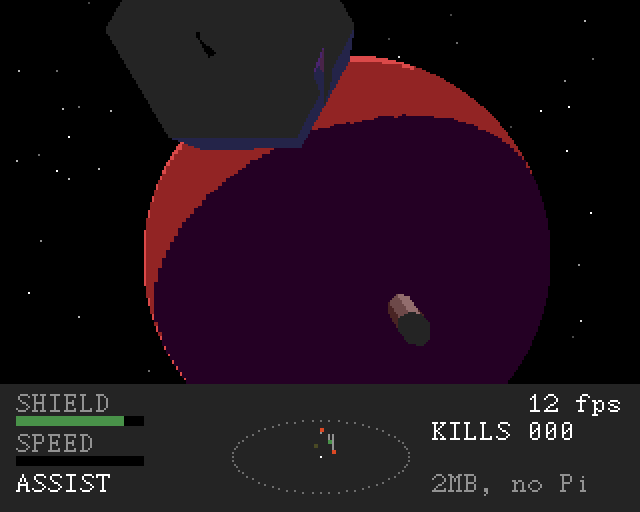
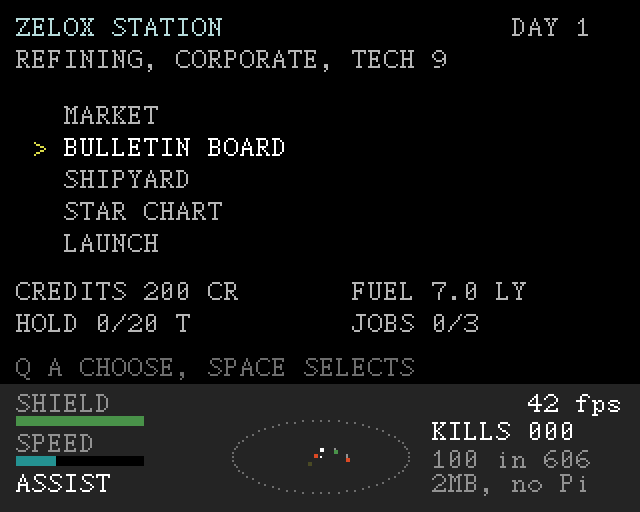
As a real Next draws them. Click a picture to see it bigger.
Twelve seconds of play, with sound: a ship shot to sparks, then a pirate comes in. Work in progress.

Download

Try the test build

It's free. One file, for a ZX Spectrum Next or an emulator. It's early: you can fly, fight, dock, trade and jump between the stars, but there's lots still to come, and things will change.

The game is made for a 2MB Next with the Raspberry Pi, but this build runs on any Next.

Latest build: v40, 31 October 2026, 48 KB. What's new in it

  1. On a real Next: copy stargosy.nex to your SD card. Pick it in the Browser and press ENTER.
  2. In an emulator: open the .nex file in CSpect.
  3. Flying: Q A nose down and up, O P roll, SPACE M faster and slower, Z fire, F flight assist on and off, H jump to the star picked on the chart. Or a Kempston joystick, or a Mega Drive pad.
  4. Docked: Q A choose, SPACE select (and go back), P buy or take a job, O sell. On the star chart, Q A O P move to the next star that way.

Changelog

What's new

  • Richer colours: shadows lean cool and violet, lit faces warm, so a planet's night side glows deep purple and ships look sunlit.
  • Mega Drive pads work: A, B and C all fire.
  • Nothing important sits at the very top or bottom of the screen any more, where an HDMI picture cuts it off.
  • The first test build is out: download it above.
  • The station's menus: the market, the bulletin board, the shipyard and the star chart.
  • A galaxy of 256 stars, each with its own name, economy, government and tech level. Jump between them with H.
  • Trading: ten kinds of cargo, prices from each world's economy, and prices that move as you buy and sell.
  • Jobs: deliveries, passengers and bounties, with deadlines in days. Late jobs pay half.
  • The shipyard: fuel, a bigger cargo bay, a beam laser and a shield booster.
  • Insurance: destroyed, you wake at the station in a basic ship, poorer.
  • Solid, shaded 3D ships, a rock and a turning space station, and a planet with a day and a night side.
  • Flying: pitch, roll, throttle and flight assist, or drift with it off.
  • Combat: pirates that line up and fire, your laser, explosions, the shield, the scanner, and sound effects.
  • Docking: slow, nose in and turned to match the station.

Progress

Ship's log

  1. The 3D engineSolid, shaded ships in 320 by 256, three screens taking turns, so nothing tears.
  2. PlanetsA day side, a night side and a bright core, lit by the sun from any side.
  3. FlightPitch, roll, throttle, flight assist, and the stars turning round you.
  4. CombatPirates, lasers, explosions, the shield, the scanner and sound.
  5. The stationA turning station and docking by hand.
  6. Trade and travel256 stars, the market, the bulletin board, the shipyard, the star chart and the jump.
  7. The ship's systemsLaser heat, power shared between shields, engines and lasers, bigger explosions, fuller sound.
  8. The lawClean, offender or fugitive; police ships; fines at the station.
  9. Big star systemsPlanets and stations far apart, a fast drive and time speed-up.
  10. Missions and a storyEscorts, rescues and a story thread through the galaxy.
  11. Music on the PiAn orchestral score, our own piece for docking.

An early test build is out: try it.